Friday, January 25, 2008

Leonidas Belgian Chocolates: 1 lb General Assortment

Leonidas Belgian Chocolates: 1 lb General Assortment
Price: $32.00


Availability: Usually ships in 1-2 business days
Ships from and sold by Leonidas Belgian Chocolates

Average customer review:

Product Description

Leonidas General Assortment...with a well balanced and representative selection of Leonidas' fresh butter creams, sinfully smooth truffles and delectable pralines, there is sure to be something in this assortment to please everybody, and is guaranteed to tantalize even the most discerning palates. Introduce a grateful friend to Leonidas today, or give in to temptation and indulge yourself...Leonidas Famous Belgian Chocolates...a great tradition of quality and freshness, since 1913.


Product Details

  • Amazon Sales Rank: #1200 in Gourmet Food
  • Brand: Leonidas Belgian Chocolates
  • Dimensions: 1.00 pounds

Features

  • Approximately 28 pieces - Net weight 1 lb
  • In Leonidas' signature wrapping paper and ribbon
  • Assorted fillings in ivory, milk, and dark chocolate coverings
  • Our most popular assortment
  • Ideal for gifts, or simply to treat yourself!

Customer Reviews

Yummy!5
So good! I brought them out Christmas morning and they were gone by noon, my family loved them!

The Choice of Chocolate Connoisseurs5
These chocolate are named after Leonidas Kestekidis, who definitely knew how to create chocolates for the true chocolate connoisseur. When he moved back to Belgium he not only married his true love, he created chocolates the world now adores. When you taste these chocolates, your taste buds will also finally know true chocolate happiness. Whether you try one of these with a cup of coffee or tea or enjoy one as a daily indulgence, these will impress.

Each chocolate has a unique design and after you sample the variety of chocolates, specific flavors will stand out as favorites.

Here are my favorite creamy fillings (ganache and buttercream) which come in dark, white and milk chocolate depending on the selection:

Antoinette - A smooth Brandy flavored ganache

Lingoit Lait - Absolutely delicious vanilla flavored fresh butter cream filling. Time definitely stopped while tasting this chocolate.

For ever - If you love coffee this may be one of the most delicious milk or dark chocolate chocolates ever made as it is filled with a special coffee cream that has hints of caramel. I will be ordering an entire box of these sometime in the future.

Merveilleux - Milk or dark chocolate filled with coffee ganache.

Europe - Dark or milk chocolate filled with rum filling.

Ganache - Milk or dark chocolate with pure ganache.

Tosca - Milk chocolate with a special ganache.

Antoinette - Delicate caramel hints in the milk chocolate coating mingle nicely with the vanilla filling.

Eve - Milk chocolate and banana filling.

Alexandre le grand - A milk or dark chocolate with caramel cream.

Also Recommended:

If you wish to also try the Napolitains, I'd suggest the 1 pound sampler Ballotin with six varieties. You may also want to look for the new Palet d'Or. A deeply delicious and strong bitter chocolate filled with ganache. The center is made with butter, cream and chocolate and the outer coating is a masterpiece with gold decorations.

Leonidas now has over 1700 stores and sales locations worldwide and they offer over 80 varieties of fresh chocolates. The chocolates are air freighted weekly from Brussels so you will always find the quality to be superior.

My chocolates arrived fast and were as fresh as if I had purchased them in Belgium. I can say this because I first tasted them in Belgium. They were carefully packaged in the famous gold boxes with signature/seasonal wrapping and a ribbon. The boxes were then placed in protective Styrofoam containers to protect the chocolates during shipping. The expedited shipping is recommended from May to early September.

If you want to introduce your friends and family to
the Leonidas Chocolates, this a perfect way to order
them and then give them out during the holidays.

~The Rebecca Review

Always very pleased with Leonidas Chocolates5
Just so you know, this is my 3rd review with this candy. We have always recieved a box of Leonidas Chocolates in excellent condition and they come to us fresh and mouth watering looking every time. They are the best chocolates that anybody could ever have. Excellent Candy!

Leonidas Belgian Chocolates Dark Chocolates Assortment - Truffles, Pralinés, Fresh Butter Creams - Signature Ballotin

Leonidas Belgian Chocolates Dark Chocolates Assortment - Truffles, Pralinés, Fresh Butter Creams - Signature Ballotin
Price: $32.00 - $64.00

See Detail

Average customer review:
Size: (choose one)
1.50 lb. Ballotin 1 lb. Ballotin 2 lbs. Ballotin
Availability: Select Size to view.

Product Description

Leonidas Dark Chocolate Assortment...with a well balanced and representative selection of Leonidas' fresh butter creams, sinfully smooth truffles and delectable pralines, all covered in rich dark chocolate, guaranteed to tantalize even the most discerning palates. Introduce a grateful friend to Leonidas today, or give in to temptation and indulge yourself...Leonidas Famous Belgian Chocolates...a great tradition of quality and freshness, since 1913.


Product Details

  • Amazon Sales Rank: #196 in Gourmet Food
  • Brand: Leonidas Belgian Chocolates

Features

  • In Leonidas' signature wrapping paper and ribbon
  • Assorted fillings in dark chocolate covering
  • For dark chocolate lovers
  • For those who truly enjoy the purest bittersweet chocolate taste

Customer Reviews

Heavenly!5
This was a Christmas gift for my husband. He says its one of his best gifts ever; every evening he looks forward to "rewarding" himself with one of these chocolates.

Makes a great present!5
I recently bought this item for a friend whom I rarely get to see because we live far away from one another. Her birthday was coming right up, and I found out from another friend that she loved dark chocolate. Amazon.com shipped the item very quickly. I had been contemplating sending the item with expedited service, but ended up assuming my friend wouldn't care one way or the other if the item arrived on time for her birthday. In fact, the item showed up just two days later, ON TIME for her birthday, when I had just paid for standard delivery. My friend immediately sent me a very excited e-mail thanking me for the present, and said that she loved it. Thanks, amazon!

Can't judge by the wrapping2
Upon hearing that I love chocolate, a friend sent this. I ate a couple of pieces and threw the rest away. It was waxy and not the least bit sweet. Choxie is creamier and more flavorful than this stuff.

PlayStation 3 Memory Card Adaptor

PlayStation 3 Memory Card Adaptor
List Price: $14.99
Price: $12.99 & eligible for FREE Super Saver Shipping on orders over $25. Details


Availability: Usually ships in 24 hours
Ships from and sold by Amazon.com

29 new or used available from $9.90

Average customer review:

Product Description

Transfer and save your game progress with this PS3 Memory Card Adapter


Product Details

  • Amazon Sales Rank: #132 in Computer & Video Games
  • Brand: Sony
  • Model: 711719804208
  • Released on: 2006-11-17
  • ESRB Rating: Mature
  • Platform: PLAYSTATION 3
  • Dimensions: 2.00 pounds

Features

  • Official Memory Card Adapter
  • Enables PlayStation and PlayStation 2 memory card data transfer to PlayStation 3 HDD
  • USB Connection

Customer Reviews

Worked as advertised!5
Worked just as planned. Moved several PS2 Memory cards to PS3 HDD. Lost no data and can now play all my PS2 games aswell. Of course now Sony is no longer making the PS3 backwards compatible.

Ugh... I spent $15 on this?2
I'm a bit disappointed that I had to spend $15 to transfer my files to my PS3 from my PS2... but I'm more disappointed that I lost the receipt so that I couldn't return it when I was done.

I REEEAAAALLLY don't think this is worth $15... unless you NEED to transfer your PS2 or PSX files.

Other than that it works great 0_o

If your friend has one, borrow it; otherwise pick one up if you have old PS1/2 memory cards4
This little guy works great for his purpose, however it's the kind of accessory that a dozen or more people could easily share. I've only ever used it once (to bring my PS2 saves to my PS3).

However, if you are the owner of a PS3 and want to trade saves back & forth with PS1/2 owners then you will likely see more use.

If you're in the same boat as me though, it would be best just to borrow a friend or neighbor's for the 10 minutes that you'll need it for.

PlayStation 3 80GB Motorstorm Pack

PlayStation 3 80GB Motorstorm Pack
Price: $499.99 & eligible for FREE Super Saver Shipping on orders over $25. Details


Availability: Usually ships in 24 hours
Ships from and sold by Amazon.com

12 new or used available from $486.92

Average customer review:

Product Description

The new Playstation 3 98004 has an 80GB hard drive for over 30% more download storage space than the 60GB model. PLAYSTATION 3 computer entertainment system unleashes a brilliant, high-definition entertainment experience. As its digital soul, the Cell Broadband Engine represents a tour de force in parallel processing, which means a gaming experience that is beyond what you know today. Its built-in Blu-ray Disc drive delivers a whole new generation in high-definition gaming and unmatched digital media storage. Whether it's gaming, Blu-ray movies, music or online services, PLAYSTATION3 invites you to Play Beyond.


Product Details

  • Amazon Sales Rank: #13 in Computer & Video Games
  • Color: Black
  • Brand: Sony
  • Model: Playstation 3
  • Released on: 2007-08-06
  • Platform: PLAYSTATION 3
  • Dimensions: 18.00 pounds

Features

  • Games will use Blu-ray discs as media format
  • Features a powerful Cell processor and a dynamic RSX graphics chip
  • Built-in Wi-Fi access for easy connection to gaming services and the Internet

Editorial Reviews

Amazon.com

Amazon.com

As DVD playback made the PlayStation 2 more than just a game machine, hefty multi-media features make the Sony PlayStation 3 an even more versatile home entertainment machine. Features such as video chat, internet access, digital photo viewing, and digital audio and video will likely make it the central component of your media set-up. Still, it is first and foremost a game console--a powerful one at that.

Under the Hood
The PS3 features IBM's "Cell" processor and a co-developed Nvidia graphics processor that makes the system able to perform two trillion calculations per second. That's approximately 320 times more calculations per second than the PS2. Along with the traditional AV and composite connections, it also boasts an HDMI (High-Definition Multimedia Interface) port, which delivers uncompressed, unconverted digital picture and sound to compatible high-definition TV and projectors. The system is capable of 128-bit pixel precision and 1080p resolution for a full HD experience.


PlayStation 3: Tower of Power


A sleek new look


Features a wireless motion-sensitive controller

Blu-Ray Is the New Way
Sony's PlayStation 3 games are encoded onto the Blu-Ray disc media format, which can hold six times as much data as traditional DVDs. This increase in capacity, combined with the awesome power of its processor and graphics card, promises mind-blowing games once developers have learned how to fully harness the new console's power. The PS3 will also support CD-ROM, CD-RW, DVD, DVD-ROM, DVD-R, DVD+R formats.

Sensational Controller
New gamers intuitively move the controller while playing, even though that movement has traditionally had no relation to what's going on in the game. Sony has picked up on this tendency and is using it to bring a new level of control to the PS3. Inside the controller is a high-precision six-axis sensing system that accurately detects fine movements in pitch, roll, and yaw, as well as three dimensions of movement. This means that future PS3 games will be controlled by the movements of your hands rather than just your thumbs. For example, you might be able to steer a car by holding the controller like a steering wheel.

While the PS3 controller looks much like its Dual Shock predecessors, it will lack the force-feedback vibration since that would only interfere with the sensing system. It uses Bluetooth 2.0 wireless technology and can support up to seven wireless controllers at a time. It's a hot-swappable system, so if your controller is running low on power, just pause your game and connect a USB 2.0 cable. You can continue playing while your controller recharges automatically.

Backwards Compatible
The PlayStation 3 will be backward compatible with most PlayStation and PlayStation 2 games, which means you'll be able to play your favorite games without keeping all the old systems. The console will have slots for Memory Stick Duo, an SD slot and a Compact Flash memory slot. It comes with a pre-installed hard disc drive, which allows you to save games as well as download content from the internet.


Gran Turismo 5 Prologue


Resistance: Fall of Man

A Slew of New Games
A whole host of game publishers are already backing the PS3 and several have even confirmed games for the console. At the 2006 Electronic Entertainment Expo (E3), more than 30 titles were displayed for the system, including Gran Turismo HD, Resistance: Fall of Man, and Final Fantasy XIII. Previously announced titles include Metal Gear Solid 4, Devil May Cry 4 and Tekken 6.

Online
Sony has stated that the PS3 will have similar online connectivity and services as the next generation of Xbox Live. Calling it "an always on, always connected device," SCEI's chief technical officer Masa Chatani said the PS3 would be constantly in touch with a "PlayStation World" network "fundamentally based on community, communication commerce, and content." Technically, the infrastructure is there to make that connection. The PS3 supports 10BASE-T, 100BASE-TX, 1000BASE-T Ethernet, as well as IEEE 802.11 b/g wireless networking protocols.

What's in the Box?

  • Game system
  • Sixaxis wireless controller
  • AC power cord
  • Audio/Video cable (HDMI or Component cable sold separately)
  • Ethernet cable
  • USB cable
  • MotorStorm

Customer Reviews

New age Technology Rocks!5
How cool is this console. We are a family of four. This system has something for everyone. The graphics are so cool. My husband has beat every game he has gotten for xmas already. Im waiting for Final Fantasy to come out for ps3. Cant wait!!

GREAT SERVICE4
AMAZON PROVIDED SUPERIOR SERVICE, GREAT DELIVERY. PS3 80GB GOOD PRODUCT, GREAT GRAPHICS, DISAPPOINTED THAT IT IS NOT COMPLETELY BACKWARD COMPATIBLE AS STATED IN THE LITERATURE EVEN WITH THE DOWNLOADABLE UPDATES. STILL VERY HAPPY OVERALL WITH THE PRODUCT I BOUGHT. THANKS

Now great for children and standard-def DVDs5
I'm a long-time PC gamer now fed up with the runaway system demands for new games and simultaneously running anti-malware apps. So I turned to the console market. I have a three-year old in the house, and most of the games for PS3 and XBOX 360 appeared less than toddler-friendly. The Wii seemed much better for the family, and the non-standard controller looked like fun. But, the Wii doesn't deliver hi-def video, and it seemed like a waste of a perfectly good HDTV.

I selfishly decided the console would be for me exclusively, and so I bought a PS3. The performance is exceptional, and the controller is a huge improvement over those available for other consoles. However, other reviewers have extolled the virtues of the PS3 for, say, teens and older. I'd like to review the PS3 as the parent of a three-year old.

Firstly, if you have kids under, say, 7 yrs old, you have Disney/Pixar DVDs. I have been frustrated watching "Cars" on our standard def DVD player, because our HDTV reveals undersampling artifacts: straight-lines appear jagged or pixelated, and grillwork or screens show moire patterns. The PS3 with recent (free) software updates performs anti-aliasing on standard def DVD videos, effectively upgrading DVD resolution to near-HD, and the undersampling errors are gone! Powerlines and pinstripes look straight without "jaggies," and the DVD-resolution video might as well be Blu-Ray to my aging eyes. In general, all of our standard-def DVDs look much better on the PS3 compared to our older Sony DVD player.

Of course, now we have the option of playing Blu-Ray discs as well, and, at the time of this writing, the competing HD-DVD format appears to be losing the battle. We haven't tried Blu-Ray movies yet, so I cannot review the performance.

Turning to games: most of the games available on the market really aren't appropriate for the 7 and under crowd. Motorstorm, which ships with the console, shows drivers being thrown from vehicles and disappearing under other vehicles with (thankfully) no added blood and gore, but it is a disturbing image, and I steer my son away from it (although he loves watching the cars race).

However, there are now several, very affordable games available on-line that are very family friendly. For example, there is the addicting "Toy Home" game (available for <>

Eat, Pray, Love: One Woman's Search for Everything Across Italy, India and Indonesia

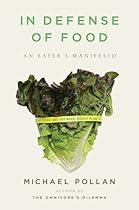
In Defense of Food: An Eater
List Price: $21.95
Price: $13.17 & eligible for FREE Super Saver Shipping on orders over $25. Details


Availability: Usually ships in 24 hours
Ships from and sold by Amazon.com

55 new or used available from $11.00

Average customer review:

Product Description

What to eat, what not to eat, and how to think about health: a manifesto for our times

"Eat food. Not too much. Mostly plants." These simple words go to the heart of Michael Pollan's In Defense of Food, the well-considered answers he provides to the questions posed in the bestselling The Omnivore's Dilemma.

Humans used to know how to eat well, Pollan argues. But the balanced dietary lessons that were once passed down through generations have been confused, complicated, and distorted by food industry marketers, nutritional scientists, and journalists-all of whom have much to gain from our dietary confusion. As a result, we face today a complex culinary landscape dense with bad advice and foods that are not "real." These "edible foodlike substances" are often packaged with labels bearing health claims that are typically false or misleading. Indeed, real food is fast disappearing from the marketplace, to be replaced by "nutrients," and plain old eating by an obsession with nutrition that is, paradoxically, ruining our health, not to mention our meals. Michael Pollan's sensible and decidedly counterintuitive advice is: "Don't eat anything that your great-great grandmother would not recognize as food."

Writing In Defense of Food, and affirming the joy of eating, Pollan suggests that if we would pay more for better, well-grown food, but buy less of it, we'll benefit ourselves, our communities, and the environment at large. Taking a clear-eyed look at what science does and does not know about the links between diet and health, he proposes a new way to think about the question of what to eat that is informed by ecology and tradition rather than by the prevailing nutrient-by-nutrient approach.

In Defense of Food reminds us that, despite the daunting dietary landscape Americans confront in the modern supermarket, the solutions to the current omnivore's dilemma can be found all around us.

In looking toward traditional diets the world over, as well as the foods our families-and regions-historically enjoyed, we can recover a more balanced, reasonable, and pleasurable approach to food. Michael Pollan's bracing and eloquent manifesto shows us how we might start making thoughtful food choices that will enrich our lives and enlarge our sense of what it means to be healthy.


Product Details

  • Amazon Sales Rank: #9 in Books
  • Published on: 2008-01-01
  • Released on: 2008-01-01
  • Number of items: 1
  • Binding: Hardcover
  • 256 pages

Editorial Reviews

Amazon.com
Amazon Significant Seven, January 2008: Food is the one thing that Americans hate to love and, as it turns out, love to hate. What we want to eat has been ousted by the notion of what we should eat, and it's at this nexus of hunger and hang-up that Michael Pollan poses his most salient question: where is the food in our food? What follows in In Defense of Food is a series of wonderfully clear and thoughtful answers that help us omnivores navigate the nutritional minefield that's come to typify our food culture. Many processed foods vie for a spot in our grocery baskets, claiming to lower cholesterol, weight, glucose levels, you name it. Yet Pollan shows that these convenient "healthy" alternatives to whole foods are appallingly inconvenient: our health has a nation has only deteriorated since we started exiling carbs, fats--even fruits--from our daily meals. His razor-sharp analysis of the American diet (as well as its architects and its detractors) offers an inspiring glimpse of what it would be like if we could (a la Humpty Dumpty) put our food back together again and reconsider what it means to eat well. In a season filled with rallying cries to lose weight and be healthy, Pollan's call to action—"Eat food. Not too much. Mostly plants."--is a program I actually want to follow. --Anne Bartholomew

Review
"In his hugely influential treatise The Omnivore's Dilemma, Pollan traced a direct line between the industrialization of our food supply and the degradation of the environment. His new book takes up where the previous work left off. Examining the question of what to eat from the perspective of health, this powerfully argued, thoroughly researched and elegant manifesto cuts straight to the chase with a maxim that is deceptively simple: "Eat food, not too much, mostly plants." But as Pollan explains, "food" in a country that is driven by "a thirty-two billion-dollar marketing machine" is both a loaded term and, in its purest sense, a holy grail. The first section of his three-part essay refutes the authority of the diet bullies, pointing up the confluence of interests among manufacturers of processed foods, marketers and nutritional scientists-a cabal whose nutritional advice has given rise to "a notably unhealthy preoccupation with nutrition and diet and the idea of eating healthily." The second portion vivisects the Western diet, questioning, among other sacred cows, the idea that dietary fat leads to chronic illness. A writer of great subtlety, Pollan doesn't preach to the choir; in fact, rarely does he preach at all, preferring to lets the facts speak for themselves. (Jan.)"
-- Publishers Weekly, starred review

About the Author
Michael Pollan is the author of four previous books, including The Omnivore's Dilemma and The Botany of Desire, both New York Times bestsellers. A longtime contributor to The New York Times, he is also the Knight Professor of journalism at Berkeley.


Customer Reviews

Finally the Truth about Nutritionism5
Pollan thoughtfully and convincingly explains the many seeming paradoxes of "State of the Art" science about how to eat for good health. He establishes that what you eat may not be as important as the context in which you eat it, and that, as I have come to believe, there is no single universally appropriate healthy diet. He convinced me that the supposedly bad Western Diet is more accurately labeled the modern over-processed, gulped-down diet, and that one is best off, perhaps, eating what one's ancestors traditionally ate a century or so ago. The science analysis is excellent--he confirms my scientist husband's observation that "the great minds do not not gravitate to dietary science" or perhaps more accurately that nutrition reporting distorts what decent science there may be. The proof of the pudding seems to be that as I have returned to the food lifestyle of my German ancestors, I am losing weight and enjoying my food, and more important, enjoying my life.

A recovering orthorexic

A common-sense guide to eating real food!5
Michael Pollan sums up his advice in 7 words: "Eat food. Not too much. Mostly plants." And then fortunately for us, he elaborates!

He starts by pointing out that, for most of history, humans were able to figure out what to eat without professional guidance. And then the "Age of Nutritionism" hit us. Now with nutrition science and the food industry, most of what we eat isn't even really food - it's processed food products. Now we read labels to decide what to eat. He effectively demonstrates why breaking food down into just a bunch of nutrients doesn't work...it ignores the fact that a food is a system, not just the sum of its parts. He also notes that 30 years of nutritional advice has left us fatter, sicker and more poorly nourished.

He then spends a great deal of time talking specifically about "the Western diet." He traces chronic diseases to the industrialization of our food, and elaborates on the rise of highly processed foods, refined grains, the use of chemicals to raise plants and animals, the abundance of cheap calories of sugar and fat, fast food and much, much more.

Finally, in the final chapters, he elaborates on the 7-word advice noted above and provides several dozen "rules" of eating that result in better health and more pleasure in eating. For example, he recommends avoiding food products that contain ingredients that are unfamiliar or unpronounceable, that are more than 5 in number or that include high-fructose corn syrup. He also offers a rule I particularly like: "have a glass of wine with dinner" (for the polyphenols in red wine, esp. resveratrol).

This is a really interesting book that avoids the usual discussion of protein, carbs and fat, and instead focuses on eating real food and enjoying the pleasure of meals that families enjoyed in bygone days.

Kara Lane,
Author of Wake Up to Powerful Living

Common sense isn't common. We needed a does of it...5
...and Michael Pollan delivers.

I absolutely love this book. It is onethat should replace most books on nutrition and all diet books on the market. I had many "ah-hah!" moments while reading this; it is so full of simple common sense. It is shocking to realize we have come so far in the modern world and yet we have forgotten how to eat. "In Defense of Food" puts it all back into perspective.

I went to the grocery store tonight and stuck to food along the walls, avoiding food products in the aisles. It was one of the best dinners I've cooked in a long while. It felt good making it, eating it, and seeing my kids eat it, knowing it was made with real food.

I highly recommend this book!

In Defense of Food: An Eater's Manifesto (Hardcover)

In Defense of Food: An Eater's Manifesto
List Price: $21.95
Price: $13.17 & eligible for FREE Super Saver Shipping on orders over $25. Details


Availability: Usually ships in 24 hours
Ships from and sold by Amazon.com

55 new or used available from $11.00

Average customer review:

Product Description

What to eat, what not to eat, and how to think about health: a manifesto for our times

"Eat food. Not too much. Mostly plants." These simple words go to the heart of Michael Pollan's In Defense of Food, the well-considered answers he provides to the questions posed in the bestselling The Omnivore's Dilemma.

Humans used to know how to eat well, Pollan argues. But the balanced dietary lessons that were once passed down through generations have been confused, complicated, and distorted by food industry marketers, nutritional scientists, and journalists-all of whom have much to gain from our dietary confusion. As a result, we face today a complex culinary landscape dense with bad advice and foods that are not "real." These "edible foodlike substances" are often packaged with labels bearing health claims that are typically false or misleading. Indeed, real food is fast disappearing from the marketplace, to be replaced by "nutrients," and plain old eating by an obsession with nutrition that is, paradoxically, ruining our health, not to mention our meals. Michael Pollan's sensible and decidedly counterintuitive advice is: "Don't eat anything that your great-great grandmother would not recognize as food."

Writing In Defense of Food, and affirming the joy of eating, Pollan suggests that if we would pay more for better, well-grown food, but buy less of it, we'll benefit ourselves, our communities, and the environment at large. Taking a clear-eyed look at what science does and does not know about the links between diet and health, he proposes a new way to think about the question of what to eat that is informed by ecology and tradition rather than by the prevailing nutrient-by-nutrient approach.

In Defense of Food reminds us that, despite the daunting dietary landscape Americans confront in the modern supermarket, the solutions to the current omnivore's dilemma can be found all around us.

In looking toward traditional diets the world over, as well as the foods our families-and regions-historically enjoyed, we can recover a more balanced, reasonable, and pleasurable approach to food. Michael Pollan's bracing and eloquent manifesto shows us how we might start making thoughtful food choices that will enrich our lives and enlarge our sense of what it means to be healthy.


Product Details

  • Amazon Sales Rank: #9 in Books
  • Published on: 2008-01-01
  • Released on: 2008-01-01
  • Number of items: 1
  • Binding: Hardcover
  • 256 pages

Editorial Reviews

Amazon.com
Amazon Significant Seven, January 2008: Food is the one thing that Americans hate to love and, as it turns out, love to hate. What we want to eat has been ousted by the notion of what we should eat, and it's at this nexus of hunger and hang-up that Michael Pollan poses his most salient question: where is the food in our food? What follows in In Defense of Food is a series of wonderfully clear and thoughtful answers that help us omnivores navigate the nutritional minefield that's come to typify our food culture. Many processed foods vie for a spot in our grocery baskets, claiming to lower cholesterol, weight, glucose levels, you name it. Yet Pollan shows that these convenient "healthy" alternatives to whole foods are appallingly inconvenient: our health has a nation has only deteriorated since we started exiling carbs, fats--even fruits--from our daily meals. His razor-sharp analysis of the American diet (as well as its architects and its detractors) offers an inspiring glimpse of what it would be like if we could (a la Humpty Dumpty) put our food back together again and reconsider what it means to eat well. In a season filled with rallying cries to lose weight and be healthy, Pollan's call to action—"Eat food. Not too much. Mostly plants."--is a program I actually want to follow. --Anne Bartholomew

Review
"In his hugely influential treatise The Omnivore's Dilemma, Pollan traced a direct line between the industrialization of our food supply and the degradation of the environment. His new book takes up where the previous work left off. Examining the question of what to eat from the perspective of health, this powerfully argued, thoroughly researched and elegant manifesto cuts straight to the chase with a maxim that is deceptively simple: "Eat food, not too much, mostly plants." But as Pollan explains, "food" in a country that is driven by "a thirty-two billion-dollar marketing machine" is both a loaded term and, in its purest sense, a holy grail. The first section of his three-part essay refutes the authority of the diet bullies, pointing up the confluence of interests among manufacturers of processed foods, marketers and nutritional scientists-a cabal whose nutritional advice has given rise to "a notably unhealthy preoccupation with nutrition and diet and the idea of eating healthily." The second portion vivisects the Western diet, questioning, among other sacred cows, the idea that dietary fat leads to chronic illness. A writer of great subtlety, Pollan doesn't preach to the choir; in fact, rarely does he preach at all, preferring to lets the facts speak for themselves. (Jan.)"
-- Publishers Weekly, starred review

About the Author
Michael Pollan is the author of four previous books, including The Omnivore's Dilemma and The Botany of Desire, both New York Times bestsellers. A longtime contributor to The New York Times, he is also the Knight Professor of journalism at Berkeley.


Customer Reviews

Finally the Truth about Nutritionism5
Pollan thoughtfully and convincingly explains the many seeming paradoxes of "State of the Art" science about how to eat for good health. He establishes that what you eat may not be as important as the context in which you eat it, and that, as I have come to believe, there is no single universally appropriate healthy diet. He convinced me that the supposedly bad Western Diet is more accurately labeled the modern over-processed, gulped-down diet, and that one is best off, perhaps, eating what one's ancestors traditionally ate a century or so ago. The science analysis is excellent--he confirms my scientist husband's observation that "the great minds do not not gravitate to dietary science" or perhaps more accurately that nutrition reporting distorts what decent science there may be. The proof of the pudding seems to be that as I have returned to the food lifestyle of my German ancestors, I am losing weight and enjoying my food, and more important, enjoying my life.

A recovering orthorexic

A common-sense guide to eating real food!5
Michael Pollan sums up his advice in 7 words: "Eat food. Not too much. Mostly plants." And then fortunately for us, he elaborates!

He starts by pointing out that, for most of history, humans were able to figure out what to eat without professional guidance. And then the "Age of Nutritionism" hit us. Now with nutrition science and the food industry, most of what we eat isn't even really food - it's processed food products. Now we read labels to decide what to eat. He effectively demonstrates why breaking food down into just a bunch of nutrients doesn't work...it ignores the fact that a food is a system, not just the sum of its parts. He also notes that 30 years of nutritional advice has left us fatter, sicker and more poorly nourished.

He then spends a great deal of time talking specifically about "the Western diet." He traces chronic diseases to the industrialization of our food, and elaborates on the rise of highly processed foods, refined grains, the use of chemicals to raise plants and animals, the abundance of cheap calories of sugar and fat, fast food and much, much more.

Finally, in the final chapters, he elaborates on the 7-word advice noted above and provides several dozen "rules" of eating that result in better health and more pleasure in eating. For example, he recommends avoiding food products that contain ingredients that are unfamiliar or unpronounceable, that are more than 5 in number or that include high-fructose corn syrup. He also offers a rule I particularly like: "have a glass of wine with dinner" (for the polyphenols in red wine, esp. resveratrol).

This is a really interesting book that avoids the usual discussion of protein, carbs and fat, and instead focuses on eating real food and enjoying the pleasure of meals that families enjoyed in bygone days.

Kara Lane,
Author of Wake Up to Powerful Living

Common sense isn't common. We needed a does of it...5
...and Michael Pollan delivers.

I absolutely love this book. It is onethat should replace most books on nutrition and all diet books on the market. I had many "ah-hah!" moments while reading this; it is so full of simple common sense. It is shocking to realize we have come so far in the modern world and yet we have forgotten how to eat. "In Defense of Food" puts it all back into perspective.

I went to the grocery store tonight and stuck to food along the walls, avoiding food products in the aisles. It was one of the best dinners I've cooked in a long while. It felt good making it, eating it, and seeing my kids eat it, knowing it was made with real food.

I highly recommend this book!

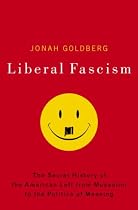
Liberal Fascism: The Secret History of the American Left, From Mussolini to the Politics of Meaning (Hardcover)

Liberal Fascism: The Secret History of the American Left, From Mussolini to the Politics of Meaning
List Price: $27.95
Price: $15.37 & eligible for FREE Super Saver Shipping on orders over $25. Details

Ships from and sold by Amazon.com

19 new or used available from $15.37

Average customer review:

Product Description

“Fascists,” “Brownshirts,” “jackbooted stormtroopers”—such are the insults typically hurled at conservatives by their liberal opponents. Calling someone a fascist is the fastest way to shut them up, defining their views as beyond the political pale. But who are the real fascists in our midst?

Liberal Fascism offers a startling new perspective on the theories and practices that define fascist politics. Replacing conveniently manufactured myths with surprising and enlightening research, Jonah Goldberg reminds us that the original fascists were really on the left, and that liberals from Woodrow Wilson to FDR to Hillary Clinton have advocated policies and principles remarkably similar to those of Hitler's National Socialism and Mussolini's Fascism.

Contrary to what most people think, the Nazis were ardent socialists (hence the term “National socialism”). They believed in free health care and guaranteed jobs. They confiscated inherited wealth and spent vast sums on public education. They purged the church from public policy, promoted a new form of pagan spirituality, and inserted the authority of the state into every nook and cranny of daily life. The Nazis declared war on smoking, supported abortion, euthanasia, and gun control. They loathed the free market, provided generous pensions for the elderly, and maintained a strict racial quota system in their universities—where campus speech codes were all the rage. The Nazis led the world in organic farming and alternative medicine. Hitler was a strict vegetarian, and Himmler was an animal rights activist.

Do these striking parallels mean that today’s liberals are genocidal maniacs, intent on conquering the world and imposing a new racial order? Not at all. Yet it is hard to deny that modern progressivism and classical fascism shared the same intellectual roots. We often forget, for example, that Mussolini and Hitler had many admirers in the United States. W.E.B. Du Bois was inspired by Hitler's Germany, and Irving Berlin praised Mussolini in song. Many fascist tenets were espoused by American progressives like John Dewey and Woodrow Wilson, and FDR incorporated fascist policies in the New Deal.

Fascism was an international movement that appeared in different forms in different countries, depending on the vagaries of national culture and temperament. In Germany, fascism appeared as genocidal racist nationalism. In America, it took a “friendlier,” more liberal form. The modern heirs of this “friendly fascist” tradition include the New York Times, the Democratic Party, the Ivy League professoriate, and the liberals of Hollywood. The quintessential Liberal Fascist isn't an SS storm trooper; it is a female grade school teacher with an education degree from Brown or Swarthmore.

These assertions may sound strange to modern ears, but that is because we have forgotten what fascism is. In this angry, funny, smart, contentious book, Jonah Goldberg turns our preconceptions inside out and shows us the true meaning of Liberal Fascism.


Product Details

  • Amazon Sales Rank: #8 in Books
  • Published on: 2008-01-08
  • Released on: 2008-01-08
  • Number of items: 1
  • Binding: Hardcover
  • 496 pages

Editorial Reviews

About the Author

JONAH GOLDBERG is a columnist for the Los Angeles Times and contributing editor to National Review. A USA Today contributor and former columnist for the Times of London, he has also written for The New Yorker, Commentary, the Wall Street Journal, and many other publications. He lives in Washington, D.C.

Excerpt. © Reprinted by permission. All rights reserved.
* 1 *
Mussolini:
The Father of Fascism


You’re the top!
You’re the Great Houdini!
You’re the top!
You are Mussolini!
—An early version of the Cole Porter song “You’re the Top” (1)


IF YOU WENT solely by what you read in the New York Times or the New York Review of Books, or what you learned from Hollywood, you could be forgiven for thinking that Benito Mussolini came to power around the same time as Adolf Hitler—or even a little bit later—and that Italian Fascism was merely a tardy, watered–down version of Nazism. Germany passed its hateful race policies—the Nuremberg Laws—in 1935, and Mussolini’s Italy followed suit in 1938. German Jews were rounded up in 1942, and Jews in Italy were rounded up in 1943. A few writers will casually mention, in parenthetical asides, that until Italy passed its race laws there were actually Jews serving in the Italian government and the Fascist Party. And on occasion you’ll notice a nod to historical accuracy indicating that the Jews were rounded up only after the Nazis had invaded northern Italy and created a puppet government in Salo. But such inconvenient facts are usually skipped over as quickly as possible. More likely, your understanding of these issues comes from such sources as the Oscar–winning film Life Is Beautiful, (2) which can be summarized as follows: Fascism arrived in Italy and, a few months later, so did the Nazis, who carted off the Jews. As for Mussolini, he was a bombastic, goofy–looking, but highly effective dictator who made the trains run on time.

All of this amounts to playing the movie backward. By the time Italy reluctantly passed its shameful race laws—which it never enforced with even a fraction of the barbarity shown by the Nazis—over 75 percent of Italian Fascism’s reign had already transpired. A full sixteen years elapsed between the March on Rome and the passage of Italy's race laws. To start with the Jews when talking about Mussolini is like starting with FDR’s internment of the Japanese: it leaves a lot of the story on the cutting room floor. Throughout the 1920s and well into the 1930s, fascism meant something very different from Auschwitz and Nuremberg. Before Hitler, in fact, it never occurred to anyone that fascism had anything to do with anti–Semitism. Indeed, Mussolini was supported not only by the chief rabbi of Rome but by a substantial portion of the Italian Jewish community (and the world Jewish community). Moreover, Jews were overrepresented in the Italian Fascist movement from its founding in 1919 until they were kicked out in 1938.

Race did help turn the tables of American public opinion on Fascism. But it had nothing to do with the Jews. When Mussolini invaded Ethiopia, Americans finally started to turn on him. In 1934 the hit Cole Porter song “You’re the Top” engendered nary a word of controversy over the line “You are Mussolini!” When Mussolini invaded that poor but noble African kingdom the following year, it irrevocably marred his image, and Americans decided they had had enough of his act. It was the first war of conquest by a Western European nation in over a decade, and Americans were distinctly unamused, particularly liberals and blacks. Still, it was a slow process. The Chicago Tribune initially supported the invasion, as did reporters like Herbert Matthews. Others claimed it would be hypocritical to condemn it. The New Republic—then in the thick of its pro–Soviet phase—believed it would be “naive” to blame Mussolini when the real culprit was international capitalism. And more than a few prominent Americans continued to support him, although quietly. The poet Wallace Stevens, for example, stayed pro–Fascist. “I am pro–Mussolini, personally,” he wrote to a friend. “The Italians,” he explained, “have as much right to take Ethiopia from the coons as the coons had to take it from the boa–constrictors.” (3) But over time, largely due to his subsequent alliance with Hitler, Mussolini’s image never recovered.

That's not to say he didn't have a good ride.

In 1923 the journalist Isaac F. Marcosson wrote admiringly in the New York Times that “Mussolini is a Latin [Teddy] Roosevelt who first acts and then inquires if it is legal. He has been of great service to Italy at home.” (4) The American Legion, which has been for nearly its entire history a great and generous American institution, was founded the same year as Mussolini’s takeover and, in its early years, drew inspiration from the Italian Fascist movement. “Do not forget,” the legion’s national commander declared that same year, “that the Fascisti are to Italy what the American Legion is to the United States.” (5)

In 1926 the American humorist Will Rogers visited Italy and interviewed Mussolini. He told the New York Times that Mussolini was “some Wop.” “I’m pretty high on that bird.” Rogers, whom the National Press Club had informally dubbed “Ambassador–at–Large of the United States,” wrote up the interview for the Saturday Evening Post. He concluded, “Dictator form of government is the greatest form of government: that is if you have the right Dictator.” (6) In 1927 the Literary Digest conducted an editorial survey asking the question: “Is there a dearth of great men?” The person named most often to refute the charge was Benito Mussolini—followed by Lenin, Edison, Marconi, and Orville Wright, with Henry Ford and George Bernard Shaw tying for sixth place. In 1928 the Saturday Evening Post glorified Mussolini even further, running an eight–part autobiography written by Il Duce himself. The series was gussied up into a book that gained one of the biggest advances ever given by an American publisher.

And why shouldn’t the average American think Mussolini was anything but a great man? Winston Churchill had dubbed him the world’s greatest living lawgiver. Sigmund Freud sent Mussolini a copy of a book he co–wrote with Albert Einstein, inscribed, “To Benito Mussolini, from an old man who greets in the Ruler, the Hero of Culture.” The opera titans Giacomo Puccini and Arturo Toscanini were both pioneering Fascist acolytes of Mussolini. Toscanini was an early member of the Milan circle of Fascists, which conferred an aura of seniority not unlike being a member of the Nazi Party in the days of the Beer Hall Putsch. Toscanini ran for the Italian parliament on a Fascist ticket in 1919 and didn’t repudiate Fascism until twelve years later. (7)

Mussolini was a particular hero to the muckrakers—those progressive liberal journalists who famously looked out for the little guy. When Ida Tarbell, the famed reporter whose work helped break up Standard Oil, was sent to Italy in 1926 by McCalls to write a series on the Fascist nation, the U.S. State Department feared that this “pretty red radical” would write nothing but “violent anti–Mussolini articles.” Their fears were misplaced. Tarbell was wooed by the man she called “a despot with a dimple,” praising his progressive attitude toward labor. Similarly smitten was Lincoln Steffens, another famous muckraker, who is today perhaps dimly remembered for being the man who returned from the Soviet Union declaring, “I have been over into the future, and it works.” Shortly after that declaration, he made another about Mussolini: God had “formed Mussolini out of the rib of Italy.” As we’ll see, Steffens saw no contradiction between his fondness for Fascism and his admiration of the Soviet Union. Even Samuel McClure, the founder of McClure’s Magazine, the home of so much famous muckraking, championed Fascism after visiting Italy. He hailed it as “a great step forward and the first new ideal in government since the founding of the American Republic.” (8)

Meanwhile, almost all of Italy’s most famous and admired young intellectuals and artists were Fascists or Fascist sympathizers (the most notable exception was the literary critic Benedetto Croce). Giovanni Papini, the “magical pragmatist” so admired by William James, was deeply involved in the various intellectual movements that created Fascism. Papini’s Life of Christ—a turbulent, almost hysterical tour de force chronicling his acceptance of Christianity—caused a sensation in the United States in the early 1920s. Giuseppe Prezzolini, a frequent contributor to the New Republic who would one day become a respected professor at Columbia University, was one of Fascism’s earliest literary and ideological architects. F. T. Marinetti, the founder of the Futurist movement—which in America was seen as an artistic companion to Cubism and Expressionism—was instrumental in making Italian Fascism the world's first successful “youth movement.” America's education establishment was keenly interested in Italy’s “breakthroughs” under the famed “schoolmaster” Benito Mussolini, who, after all, had once been a teacher.

Perhaps no elite institution in America was more accommodating to Fascism than Columbia University. In 1926 it established Casa Italiana, a center for the study of Italian culture and a lecture venue for prominent Italian scholars. It was Fascism’s “veritable home in America” and a “schoolhouse for budding Fascist ideologues,” according to John Patrick Diggins. Mussolini himself had contributed some ornate Baroque furniture to Casa Italiana and had sent Columbia’s president, Nicholas Murray Butler, a signed photo thanking him for his “most valuable contribution” to the pro...


Customer Reviews

A fascinating book5
A very interesting book on the intellectural roots of modern liberalism. The author must have really struck a nerve given the vitriolic, over-the-top responses of some of the critics on this site. If the book wasn't as well put together and interesting as this one indeed is, then then these knee-jerk critics would not feel threatened enough to bother with their howling. Read it for yourself and you decide.

Clever Polemic; Useless History2
Fascism was a specific political movement with very particular characteristics. The word "fascist" is and has been ignorantly thrown around a lot, especially by overheated leftist college students, but that's no reason to twist its meaning even further. Just because it's comforting for some segments of the conservative electorate to believe that modern American liberals are the heirs of Adolf Hitler doesn't make it correct.

The biggest problem with the book is that Goldberg's definition of fascism is so broad to make it virtually useless. In his view, any kind of collective or government action is "fascist". He concentrates on Woodrow Wilson's activities during WW1 as an example, and brings FDR into the fascist fold, but based on the fuzzy set of criteria that Goldberg sets forth not only is Wilson and FDR "fascist", but Abraham Lincoln, Ronald Reagan and Teddy Roosevelt could be also. In Mr. Goldberg's world, World War 2 was fought entirely by Fascists, Fascist Germans, Italians and Japanese, vs. Fascist Soviets allied with Fascist Americans. In short, it's premise is sloppy. Mr. Goldberg refuses compensate for historical context. Comparing 1930s political economy to that of today's is something that should be done very carefully. Capitalism was widely regarded as a failure in the 1930s, and virtually all industrial countries tinkered with it, including American conservatives (think Smoot-Hawley).

And that is the biggest blind alley in this work. By concentrating on political economy Goldberg ignores the more important markers of Fascism. Fascists were notoriously uninterested in economics, and Fascist political economy, such as it was, was a pastiche of free market capitalism, corporatism and socialism, and in most countries where it was ascendant it lazily morphed into support for the status quo, i.e. protecting wealthy landowners and business owners. What made Fascism a distinctive political movement was not a centrally planned economy but militarism, racial chauvinism, and a sort of false, golden age, nostalgia for monarchism, Fascism's closest relative, which is why fascist movements, especially in southern Europe attracted monarchists into their ranks.

Mr. Goldberg doesn't address these more cogent descriptors of fascism because it would contradict his thesis. Since most American liberals are less militaristic then his own conservative base, to highlight Fascism's militarism would destroy his argument. And by neglecting Fascism's kitcsh-laden obsession with the nuclear family, he avoids uncomfortable comparison's with American social conservatism. And by dismissing Fascism's anti-communism as mere factional competition, he ignores Fascism's most important base--lower middle class shop owners and artisans, terrified of losing their property in a Marxist revolution. Hitler did admire Stalin's totalitarianism, but he hated Marxism, which if Mr. Goldberg cracked open Mein Kampf, he would know.

But I suspect Mr. Goldberg does know, which is why in the end his book is so dishonest. It is not an inquiry of history or politics, it's a partisan polemic, which is fine, but buyers should know that when they buy it.

A good free read1
I read this book over a couple of visits to a nationally-known book seller. I won't name the seller but it's the one with comfy chairs strewn around the floor.

I certainly wouldn't spend much money on this thing. (I see that Amazon has already deeply reduced its price, from $27.95, marked down to $15.37.)

I'm rating it one star because that's the smallest rating available.

I eagerly await its place on the Conservative Book Club's $1.00 list.

At $1.00 it makes a good door stop.

I am looking forward to the sequel to this book, because I have a pair of French doors in my house.

A Thousand Splendid Suns (Hardcover)

A Thousand Splendid Suns
List Price: $25.95
Price: $14.27 & eligible for FREE Super Saver Shipping on orders over $25. Details


Availability: Usually ships in 24 hours
Ships from and sold by Amazon.com

202 new or used available from $12.85

Average customer review:

Product Description

After 103 weeks on the New York Times bestseller list and with four million copies of The Kite Runner shipped, Khaled Hosseini returns with a beautiful, riveting, and haunting novel that confirms his place as one of the most important literary writers today.

Propelled by the same superb instinct for storytelling that made The Kite Runner a beloved classic, A Thousand Splendid Suns is at once an incredible chronicle of thirty years of Afghan history and a deeply moving story of family, friendship, faith, and the salvation to be found in love.

Born a generation apart and with very different ideas about love and family, Mariam and Laila are two women brought jarringly together by war, by loss and by fate. As they endure the ever escalating dangers around them-in their home as well as in the streets of Kabul-they come to form a bond that makes them both sisters and mother-daughter to each other, and that will ultimately alter the course not just of their own lives but of the next generation. With heart-wrenching power and suspense, Hosseini shows how a woman's love for her family can move her to shocking and heroic acts of self-sacrifice, and that in the end it is love, or even the memory of love, that is often the key to survival.

A stunning accomplishment, A Thousand Splendid Suns is a haunting, heartbreaking, compelling story of an unforgiving time, an unlikely friendship, and an indestructible love.


Product Details

  • Amazon Sales Rank: #7 in Books
  • Published on: 2007-05-22
  • Released on: 2007-05-22
  • Number of items: 1
  • Binding: Hardcover
  • 384 pages

Editorial Reviews

Amazon.com
It's difficult to imagine a harder first act to follow than The Kite Runner: a debut novel by an unknown writer about a country many readers knew little about that has gone on to have over four million copies in print worldwide. But when preview copies of Khaled Hosseini's second novel, A Thousand Splendid Suns, started circulating at Amazon.com, readers reacted with a unanimous enthusiasm that few of us could remember seeing before. As special as The Kite Runner was, those readers said, A Thousand Splendid Suns is more so, bringing Hosseini's compassionate storytelling and his sense of personal and national tragedy to a tale of two women that is weighted equally with despair and grave hope.

We wanted to spread the word on the book as widely, and as soon, as we could. See below for an exclusive excerpt from A Thousand Splendid Suns and early reviews of the book from some of our top customer reviewers.--The Editors


An Exclusive Excerpt from A Thousand Splendid Suns

We have arranged with the publisher to make an exclusive excerpt of A Thousand Splendid Suns available on Amazon.com. Click here to read a scene from the novel. It's not the opening scene, but rather one from a crucial moment later in the book when Mariam, one of the novel's two main characters, steps into a new role.


Early Buzz from Amazon.com Top Reviewers

We queried our top 100 customer reviewers as of March 6, 2007, and asked them to read A Thousand Splendid Suns and share their thoughts. We've included these early reviews below in the order they were received. For the sake of space, we've only included a brief excerpt of each reviewer's response, but each review is available for reading in its entirety by clicking the "Read the review" link.

Joanna Daneman: "His style is deceptively simple and clear, the characters drawn deftly and swiftly, his themes elemental and huge. This is a brilliant writer and I look forward to more of his work." Read Joanna Daneman's review

Seth J. Frantzman: "Khaled Hosseini has done it again with 'A Thousand Splendid Sons', presenting a new, dashing and dark tale of two generations of women trapped in a loveless marriage, bracketed by great events." Read Seth J. Frantzman's review

Donald Mitchell: "Khaled Hosseini has succeeded in capturing many important historical and contemporary themes in a way that will make your heart ache again and again. Why will your reaction be so strong? It's because you'll identify closely with the suffering of almost all the characters, a reaction that's very rare to a modern novel." Read Donald Mitchell's review

Lawrance M. Bernabo: "All things considered, following up on a successful first novel is probably harder than coming up with the original effort and Hosseini could have rested on his laurels in the manner of Harper Lee, but as "A Thousand Splendid Suns" amply proves, this native of Kabul has more stories to tell about the land of Afghanistan." Read Lawrance M. Bernabo's review

Amanda Richards: "There are parts of this book that will have grown men surreptitiously blotting the tears that are on the verge of overflowing their ducts, and by the time you get to the middle, you won't be able to put it down. Hosseini's simple but richly descriptive prose makes for an engrossing read, and in my opinion, "A Thousand Splendid Suns" is among the best I have ever read. This is definitely not one to be missed." Read Amanda Richards's review

N. Durham: "All that being said, "A Thousand Splendid Suns" is a bit more enjoyable than Hosseini's previous "The Kite Runner", and once again he manages to give we readers another glimpse of a world that we know little about but frequently condemn and discard. However, if you were one of the many that for some reason absolutely loved "The Kite Runner", chances are that you'll love this as well." Read N. Durham's review

John Kwok: "Khaled Hosseini's "A Thousand Splendid Suns" is a genuine instant literary classic, and one destined to be remembered as one of 2007's best novels. It should be compared favorably to such legendary Russian novels like "War and Peace" and "Doctor Zhivago"." Read John Kwok's review

Thomas Duff: "Normally I'm more of an action-adventure type reader when it comes to novels and recreational reading. But I was given the chance to read A Thousand Splendid Suns by Khaled Hosseini (author of The Kite Runner), so I decided to try something out of my normal genre. I am *so* glad I did. This is a stunning and moving novel of life and love in Afghanistan over a 30 year period." Read Thomas Duff's review

Charles Ashbacher: "This book manages to simultaneously capture the history of Afghanistan over the last thirty years and how women are treated in conservative Islamic societies.... In many ways it is a sad book, your heart goes out to these two women in their hopeless struggle to have a decent life with a brutal man in an unforgiving, intolerant society." Read Charles Ashbacher's review

W. Boudville: "Hosseini presents a piognant view into the recent tortured decades of the Afghan experience. From the 1970s, under a king, to the Soviet takeover, to the years of resistance. And then the rise and fall of the Taliban. An American reader will recognise many of the main political events. But to many Americans, Afghanistan and its peoples and religion remain an opaque and troubling mystery." Read W. Boudville's review

Mark Baker: "I tend to read plot heavy books, so this character study was a definite change of pace for me. I found the first half slow going at times, mainly because I knew where the story was going. Once I got into the second half, things really picked up. The ending was very bittersweet. I couldn't think of a better way to end it." Read Mark Baker's review

Grady Harp: "Hosseini takes us behind those walls for forty some years of Afghanistan's bloody history and while he does not spare us any of the descriptions of the terror that continues to besiege that country, he does offer us a story that speaks so tenderly about the fragile beauty of love and devotion and lasting impression people make on people." Read Grady Harp's review

Robert P. Beveridge: "When I was actively reading it, the pages kept turning, and more than once I found myself foregoing food or sleep temporarily to get in just one more chapter. When I had put it down, however, I felt no particular compulsion to pick it back up again. It's a good book, and a relatively well-written one, but it's not a great book. Enjoyable without leaving a lasting impression." Read Robert P. Beveridge's review

B. Marold: "While the events in Afghanistan and the wider world create a familiar framework for the stories of these two women, it is nothing more than a framework. The warp and weft of everyday life, and the interaction of the two women and their close relatives is the heartbeat of the story." Read B. Marold's review

Daniel Jolley: "Khaled Hosseini has written a majestic, sweeping, emotionally powerful story that provides the reader with a most telling window into Afghan society over the past thirty-odd years. It's also a moving story of friendship and sacrifice, giving Western readers a rare glimpse into the suffering and mistreatment of Afghan women that began long before the Taliban came to power." Read Daniel Jolley's review


From Publishers Weekly
Starred Review. Afghan-American novelist Hosseini follows up his bestselling The Kite Runner with another searing epic of Afghanistan in turmoil. The story covers three decades of anti-Soviet jihad, civil war and Taliban tyranny through the lives of two women. Mariam is the scorned illegitimate daughter of a wealthy businessman, forced at age 15 into marrying the 40-year-old Rasheed, who grows increasingly brutal as she fails to produce a child. Eighteen later, Rasheed takes another wife, 14-year-old Laila, a smart and spirited girl whose only other options, after her parents are killed by rocket fire, are prostitution or starvation. Against a backdrop of unending war, Mariam and Laila become allies in an asymmetrical battle with Rasheed, whose violent misogyny—"There was no cursing, no screaming, no pleading, no surprised yelps, only the systematic business of beating and being beaten"—is endorsed by custom and law. Hosseini gives a forceful but nuanced portrait of a patriarchal despotism where women are agonizingly dependent on fathers, husbands and especially sons, the bearing of male children being their sole path to social status. His tale is a powerful, harrowing depiction of Afghanistan, but also a lyrical evocation of the lives and enduring hopes of its resilient characters. (May)
Copyright © Reed Business Information, a division of Reed Elsevier Inc. All rights reserved.

From Bookmarks Magazine
A Thousand Splendid Suns raises inevitable comparisons to The Kite Runner, which sat on The New York Times best seller list for 103 weeks. Most critics agreed that Khaled Hosseini's second novel is as devastating, if not even more powerful, than his first. A natural, if not always the most eloquent or subtle, storyteller, Hosseini gives voice to two women trying to survive in a despotic household while caught up in the throes of war. Most critics thought that Hosseini successfully evokes his female characters' inner lives—not an easy feat for a male author—while a few observed that Mariam and Laila fail to resonate emotionally. Others noted some melodrama and predictability. Despite these quibbles, the novel offers a chilling, all-too-real portrait Afghan life. "It is, for all its shortcomings, a brave, honorable, big-hearted book" (Washington Post).

Copyright © 2004 Phillips & Nelson Media, Inc.


Customer Reviews

Highly praised - and rightly so 5
This second novel of Khaled Hosseini has been highly praised, and rightly so. Once again a moving personal story is tied up with recent tragic events of conflict in Afghanistan. Once again we see human and humane heroes contending with evil forces larger than themselves which do terrible destruction but do not deprive them of their basic humanity. Once again we have an inside view of humane people in an Islamic society who are persecuted by fanatical Taliban and other Islamists. This story of the suffering of two women who become the wives of a single brutish man who one of them is forced in defense of the other- to kill- also underlines this struggle within Islamic society as a whole - between the relatively open free humane side and the fanatical closed violent oppressive side.
Hosseini almost seems to make it a situation where the women are the human beings and the masculine element is the source of evil. But the redeeming character of Tariq and the story of his love with Laila provide a masculine hero the reader can admire and sympathize with.
Hosseini is an outstanding story-teller. He gives a clear sense of an exotic other world and his descriptions move the narrative along. This is an outstanding work.
I would also say Hosseini seems to be a remarkable and caring human being - as he is dedicating himself to helping the Afghani refugees who have suffered so much from the conflict.
I personally enjoyed 'The Kite Runner' more than this book but this is also an especially fine and highly readable work.

Tragic, moving, fantastic5
I really liked The Kite Runner. So much so, that I was reluctant to pick up this book. It always seems that the second book for a successful author is not up to the standard set by the first one. I have to say that I was proven wrong this time! I really enjoyed this book. But it was SAD! Be prepared for that. In light of that, I have to say that is was one of the best books of an unlikely friendship I have ever read. And, being set in the backdrop of war-weary Afghanistan only adds to the tragedy. This is one of those books that will stay with you for a long time after you've read it.

Hosseini brings sun to the night5
Though A Thousand Splendid Suns speaks of death, violence, and despair, Khaled Hosseini is able to bring sun to the night of the human condition. He gives readers a thousand splendid suns. The narrative spans thirty years of Afghan history--the Soviet invasion and occupation, the Taliban and the post-Taliban. Hosseini weaves the historic facts through his narrative while describing the suffering of three generations of Afghani men and women.

He speaks through the perspective of two main characters--women, Miriam and Laila. Their voices describe in specific detail the devastating roles women play in the culture. Miriam and Laila dispel stereotypes. They are real people the reader can identify with, who fall in love, who laugh, who cry, who are angry, and who continue to hope in the midst of evil. Both women were married off to the same man, Rasheed, who treats them with violence and disregard. Ultimately while living as prisoners at the whim of this heartless man, the women bond. They support each other, and Laila's two children.

In the last scene Laila muses on her deceased friend Miriam, who had been tried, convicted, and put to death for the murder of Rasheed, who she had killed while he was attempting to strangle Laila. With the sun on her face Laila relishes Miriam's presence in her heart, and in her surroundings. She sees Miriam in the restoration of the orphanage, in the trees that she and Tariq have planted, and in the warm blankets that have been bought for the children with Miriam's inheritance. Laila hears Miriam in the children's laughter, and in Azizia's prayers. Laila feels new life within her, the new child of her loving husband Tariq. Full of contentment, Laila sees life as full, full of a thousand splendid suns.